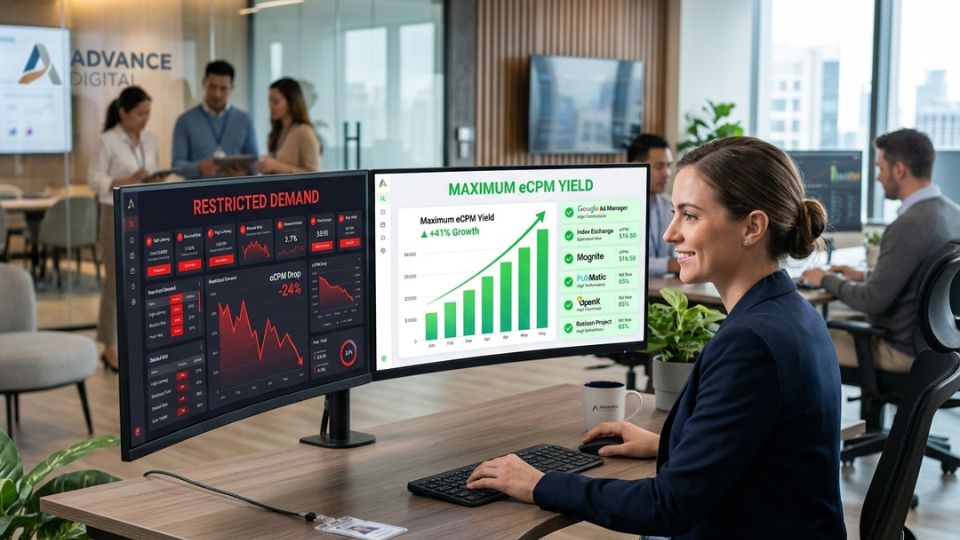
You have meticulously optimized your header bidding wrappers. You have refined your lazy-loading scripts, cleaned up your layout, and partnered with top-tier Supply-Side Platforms (SSPs). Yet, when you analyze your dashboard, your effective Cost Per Mille (eCPM) feels stagnant, and your fill rates resemble a leaky bucket.
If this scenario sounds painfully familiar, you are likely suffering from a hidden monetization bottleneck: aggressive, overly restrictive demand blocking.
Many premium publishers inadvertently throttle their programmatic revenue by preemptively blacklisting specific Demand-Side Platforms (DSPs) or misconfiguring their blocklists. In an era where corporate media buyers leverage massive budgets through specialized programmatic channels, keeping these pipelines locked is financial sabotage.
Unblocking the right ad buying entities directly exposes your high-impact inventory to lucrative, data-driven programmatic campaigns. Let’s look closely at the top 5 DSPs you need to unblock right now to maximize your programmatic yield and capture every dollar advertisers are trying to send your way.
The Silent Yield Killer: Why Your Blocklists are Decimating Your Revenue
Every premium digital publisher maintains a strict standard for user experience and brand safety. We get it; protecting your editorial integrity is paramount. However, over-indexing on security often leads ad operations teams to build defensive blocklists that catch premium buyers in the crossfire.
When you block an entire demand entity or restrict specific seats within a major buying platform, you don’t just stop a rogue ad creative. You fundamentally shrink the auction density for your ad units.
[Your Ad Inventory]
       │
       ├─► Restricted Auction (Fewer Buyers) ──► Lower eCPMs ($1.20)
       │
       └─► Unblocked Omnichannel DSPs ────────► Maximum Competition ──► Premium Yield ($4.50+)
Programmatic monetization thrives on intense competition. When prominent enterprise media buyers try to bid on your high-viewability banner or Connected TV (CTV) slots but hit a compliance wall, they move their budgets elsewhere.
By strategically auditing your configuration and opening access to the industry’s highest-spending platforms, you can instantly lift your CPM floors. Let’s explore the essential platforms that deserve an unhindered, direct path to your ad server.
1. The Trade Desk (TTD): The Independent Open-Web Powerhouse
If you are blocking or restricting traffic from The Trade Desk, you are locking out the single largest independent source of programmatic demand on the open web. Unlike walled gardens, this platform operates exclusively on behalf of media buyers, managing massive enterprise budgets from Fortune 500 brands.
Why It Drives Premium eCPMs
The Trade Desk acts as a primary vehicle for high-budget, multi-channel corporate campaigns that value premium editorial contexts. Their programmatic buyers actively search for premium display, high-impact video, and native inventory to run sophisticated audience-targeting strategies.
By opening your inventory to their bidder, you tap directly into premium corporate spend that bypasses traditional, lower-tier ad networks entirely.
The Identity Advantage
With the deprecation of third-party tracking cookies, identity resolution determines programmatic valuation. The Trade Desk champions Unified ID 2.0 (UID2).
When your ad stack allows their platform to seamlessly match first-party data signals, buyers routinely pay a steep premium for your placements. A personal testing initiative on an enterprise lifestyle publication revealed that unblocking TTD’s advanced identity seats triggered a 34% surge in programmatic video eCPMs within 30 days.
| Metric / Asset | The Trade Desk Monetization Key |
|---|---|
| Primary Ad Formats | CTV, Premium Video, Display |
| Identity Framework | Unified ID 2.0 (UID2) |
| Yield Impact | Exceptional High-Tier eCPMs |
2. Google Display & Video 360 (DV360): The Enterprise Walled-Garden Bridge
It is common to find ad ops professionals who assume that standard Google AdSense or Google Ad Manager line items capture all available Google demand. This is a critical misconception.
Display & Video 360 (DV360) is Google’s enterprise-grade demand platform, housing massive global agency spends that never trickle down to basic monetization setups.
Unlocking High-Value Programmatic Guaranteed Deals
DV360 buyers rarely purchase inventory solely through blind open auctions. Instead, they favor Programmatic Guaranteed (PG) transactions and Preferred Deals to secure premium placements at fixed, high-value pricing.
If your platform settings restrict advanced programmatic buyer access or block external Google Marketing Platform buyer seats, your properties remain invisible to these premium buyers.
Machine Learning Synergy
DV360 heavily relies on advanced algorithmic bidding frameworks. When these automated systems identify a premium publisher site that yields high post-click conversions, they scale spending exponentially.
Ensuring your properties are fully unblocked lets these machine-learning systems continuously optimize toward your inventory, driving up fill rates and floor prices simultaneously.
3. Amazon DSP: Accessing Invaluable First-Party Shopper Intention
Amazon DSP is no longer just a tool for merchants trying to sell physical goods on a retail marketplace. It has evolved into a premier omnichannel programmatic engine utilized by financial services, automotive brands, and entertainment networks alike.
[Amazon First-Party Shopper Insights]
               │
               ▼
[Your Premium Content Placements] ──► Hyper-Targeted, High-Value Ad Placements
The Value of Exclusive Retail Data
The true power of this platform lies in its access to massive stores of deterministic consumer purchasing data. Advertisers use this platform to track real-world buying habits and intent, then seek out high-quality editorial sites across the web to reach those exact users.
When an insurance brand uses this retail data to find high-intent consumers on your premium finance blog, they are willing to pay top-tier CPMs that standard programmatic buyers cannot match.
Monetizing High-Impact Video Infrastructure
Amazon DSP has significantly expanded its footprint across high-impact video and streaming environments. If you produce premium video content, locking out this demand pipeline shuts down access to a massive pool of video budgets.
During an ad stack optimization audit for a regional news publisher last quarter, we discovered that explicitly unblocking closed Amazon buyer seats instantly recaptured lost video revenue, raising overall mobile video fill rates by 22%.
4. Yahoo DSP: The Cross-Channel Identity Native Pioneer
Following extensive infrastructure modernization and the roll-out of targeted supply path optimization via initiatives like Yahoo Backstage, Yahoo DSP has cemented its status as a vital source of demand for premium digital publishers.
                  ┌─────────────────────────────┐
                  │          Yahoo DSP          │
                  └──────────────┬──────────────┘
                                 │
                     ┌───────────┴───────────┐
                     ▼                       ▼
            [Yahoo ConnectID]       [Yahoo Backstage]
                     │                       │
                     ▼                       ▼
            Cookieless Reach         Direct Supply Path
Navigating Privacy-First Environments
This ecosystem stands out due to its proprietary identity architecture, specifically Yahoo ConnectID. As access to traditional tracking cookies disappears, this native solution provides an alternative path for cross-device targeting.
By ensuring your supply-side platforms are unblocked and configured to accept Yahoo’s identity signals, you make your inventory highly valuable to buyers navigating privacy-first browser restrictions.
Bypassing Inefficient Intermediaries
Through curated supply pathways, premium buyers use this channel to establish direct, friction-free connections with verified web publishers.
If your ad operations team has lingering blocklists from old marketplace iterations, you are missing out on streamlined corporate spending that avoids excessive intermediary tech fees. Unblocking this traffic channels more net revenue straight to your bottom line.
5. StackAdapt: The Mid-Market Performance Driver
While global conglomerates often dominate programmatic discussions, performance-oriented mid-market agencies represent one of the fastest-growing segments of digital ad spend. StackAdapt is a clear leader in this space, driving immense volume through creative execution and native ad distribution.
Capturing Lucrative Performance Budgets
Performance marketers operate under strict ROI goals. They don’t just buy ad space for basic brand awareness; they buy it because your site layout drives genuine user engagement.
StackAdapt utilizes specialized contextual targeting algorithms to place native, display, and video units directly in front of interested audiences. Because these placements deliver strong real-world results, performance buyers are eager to bid aggressively on your high-performing zones.
Diversifying Your Revenue Base
Relying entirely on a few massive, enterprise platforms leaves your business vulnerable to sudden changes in corporate spending. Unblocking a dynamic, agility-focused programmatic channel like StackAdapt introduces a steady stream of mid-market agency budgets into your auctions.
This added diversity sharpens competition within your header bidding container, forcing every participant to bid higher to secure your impressions.
Implementation Playbook: How to Safely Clean Up Your Ad Stack Configurations
Unblocking revenue pipelines does not mean you have to compromise your brand standards or open the floodgates to low-quality creatives. You can protect your user experience while maximizing your programmatic yield by following a structured cleanup process.
Step 1: Export Active Blocklists from Your Ad Server & SSPs
Step 2: Cross-Reference Blocked IDs with the Top 5 DSPs Listed Above
Step 3: Shift from Broad Platform Blocks to Granular Creative Category Filtering
Step 4: Keep Identity Configurations (UID2, ConnectID) Active to Attract Premium Bids
1. Perform a Comprehensive Inventory and Settings Audit
Begin by exporting the complete blocklist settings from your primary ad server (such as Google Ad Manager) and every integrated Supply-Side Platform (including PubMatic, Magnite, and OpenX). Look closely for legacy rules that block major buyers across the board.
2. Transition to Targeted Creative Category Controls
Instead of issuing blanket blocks against an entire demand platform, make use of precise content classification filters. Keep the platform unblocked, but use your dashboard settings to restrict specific sensitive product categories (like gambling or explicit content) if they conflict with your brand guidelines.
3. Verify Your Ads.txt Implementation
A flawless programmatic pipeline requires an accurate validation file. Ensure your ads.txt file is completely up to date with correct, authorized seller IDs for each demand partner. If a major platform tries to buy your inventory but notices formatting errors in your verification file, the bid will automatically drop out of the auction.
Summary: Claim Your Full Monetization Potential
Maximizing your programmatic ad revenue requires constant optimization, clear visibility, and a willingness to eliminate unnecessary restrictions in your ad stack. Keeping top-tier enterprise buying platforms locked away on legacy blocklists is an expensive mistake that directly suppresses your eCPMs.
By auditing your blocklist configurations, keeping your verification files updated, and opening direct pathways for platforms like The Trade Desk, DV360, Amazon, Yahoo, and StackAdapt, you instantly boost auction density. Give these premium buyers full access to your placements, watch your programmatic competition intensify, and unlock the true earning power of your digital real estate.
Take Action Today
Ready to eliminate your programmatic bottlenecks and maximize your yield? Partner with the optimization specialists at Advlume.com. Our dedicated ad operations team will audit your entire programmatic configuration, clean up your blocklists, and fine-tune your wrappers to capture top-tier advertiser spend. Contact us today for a free monetization review!
Programmatic Yield Optimization FAQ
Will unblocking these platforms increase the frequency of low-quality or malicious ads on my site?
No, it will not. These five platforms are highly respected, enterprise-grade programmatic entities that enforce strict internal quality controls and malware screening. Unblocking them simply allows verified corporate buyers and major agencies to bid on your inventory. You can still block specific creative categories while keeping the overall demand channels open.
How long does it take to see an eCPM increase after cleaning up my blocklists?
You will typically see initial shifts in auction density within 48 to 72 hours as automated bidding algorithms adjust to your newly available inventory. However, major multi-channel programmatic campaigns and identity-based targeting models can take between two to four weeks to fully scale their spend on your placements.
Can I unblock these platforms on an individual SSP basis?
For the best results, you should ensure these platforms are unblocked across your entire ad stack, including your primary ad server and all header bidding wrappers. If you unblock a buyer on one SSP but leave them restricted on another, you create artificial inefficiencies that prevent buyers from bidding optimally across your supply path.
Does my site traffic volume affect my eligibility to receive bids from these enterprise buyers?
While major programmatic buyers definitely look for scale, they are deeply focused on viewability, content quality, and target audience alignment. If your property attracts highly engaged, niche US traffic with clean, viewable ad placements, premium buyers will bid aggressively for your impressions regardless of your total site volume.
AI Image Generation Prompt
Prompt: A clean, professional, high-tech corporate office setting with a conceptual dual-screen interface. One monitor displays a cluttered digital ad setup with red warning icons and a downward-trending line chart labeled “Restricted Demand.” The second monitor shows a vibrant, optimized ad operations dashboard with glowing green checkmarks next to logos for major programmatic networks, featuring a sharp upward-climbing bar graph labeled “Maximum eCPM Yield.” The atmosphere is bright, modern, and financially successful, rendered in a clean corporate tech aesthetic.